Egg-naut - Designing a Lunar Lander!
What does it take for an astronaut to land safely on the Moon?
This exact question was answered in our latest class activity where we designed our own Lunar Landers, but with a fun twist – our astronauts were eggs!
♙ The Challenge ♙
We were divided into teams, each tasked with designing and building a landing device that would protect our delicate "Egg-naut" when dropped from a significant height. Just like real aerospace engineers, we had to work within a set budget and choose from a limited selection of materials. Every paper, piece of tape, marshmallow and balloon came with a price tag, so we had to plan carefully and spend wisely.
♘ Brainstorming ♘
Each team brainstormed different design ideas—some opted for plastic bag parachutes, others tried air resistance structures, and a few even opted for the simple protective padding. We had to think critically about physics principles like impact force, gravity, and air resistance. Would adding straws create a protective cage? Should we invest in extra padding, or was a slower descent more important? Every decision mattered.
♕ The Drop-test ♕
After building our landers, it was time for the real test. One by one, the teams released their Egg-nauts from the designated height. Some landers gently floated down, others plummeted at alarming speeds, while some special ones even bounced! We first released the eggs first from a small height, which every team's Egg-naut survived, but then some of the courageous teams opted to throw their devices out the window (literally!). Most teams cheered for the success of their Landers, whereas the other laughed at their cracked eggs and tried to figure out what went wrong.
♖ Analyzing the Drop ♖
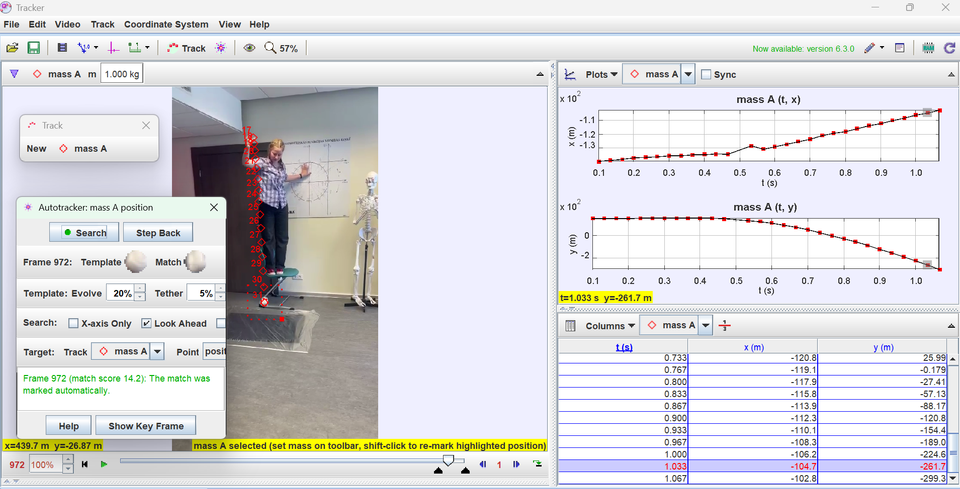
After the drop test, we used Tracker software to track the descent of our Egg-nauts. By analyzing the recorded data, we were able to graph a velocity-time chart and determine the acceleration due to gravity (g) on Earth. This step helped us understand real-world applications of physics, as we could see how air resistance and initial velocity influenced the motion of our landers. It was fascinating to compare our calculated values with the standard 9.81 m/s² and discuss any discrepancies.
♔ What we learnt ♔
This project was more than just a fun experiment; it taught us valuable lessons in teamwork, problem-solving, and engineering. We learned that creativity and careful planning are just as important as the materials used. Budgeting and decision-making played a crucial role—just like in real-world space missions, where resources are limited, and every choice affects success.
The excitement of watching our Egg-nauts land (or break!) made this challenge unforgettable. We got to experience a small taste of the challenges NASA engineers face when designing real spacecraft. Plus, seeing our ideas come to life and testing them in action was incredibly rewarding.
In the end, whether our Egg-nauts survived or not, we all walked away with a deeper appreciation for science, engineering, and the thrill of innovation. Who knows? Maybe one day, one of us will design a real lunar lander!
#Physics #NASA #LunarLander #EggDrop