Expedition to the Future – Day 5: Questions That Lead Us Forward
Can one day at CERN change how you see science, faith, and the future? For our students, today was exactly that. It was a day full of deep thoughts, inspiring answers – and even more inspiring questions.
The morning started with a brilliant lecture by Sofia Vallecorsa on AI and quantum computing. She showed us how these powerful tools are already working together in science, solving problems that normal computers cannot. Our students were amazed. One said, “It’s like seeing science fiction turn into real life.” We realised that the future of research will not only depend on people, but also on machines that can think and learn.
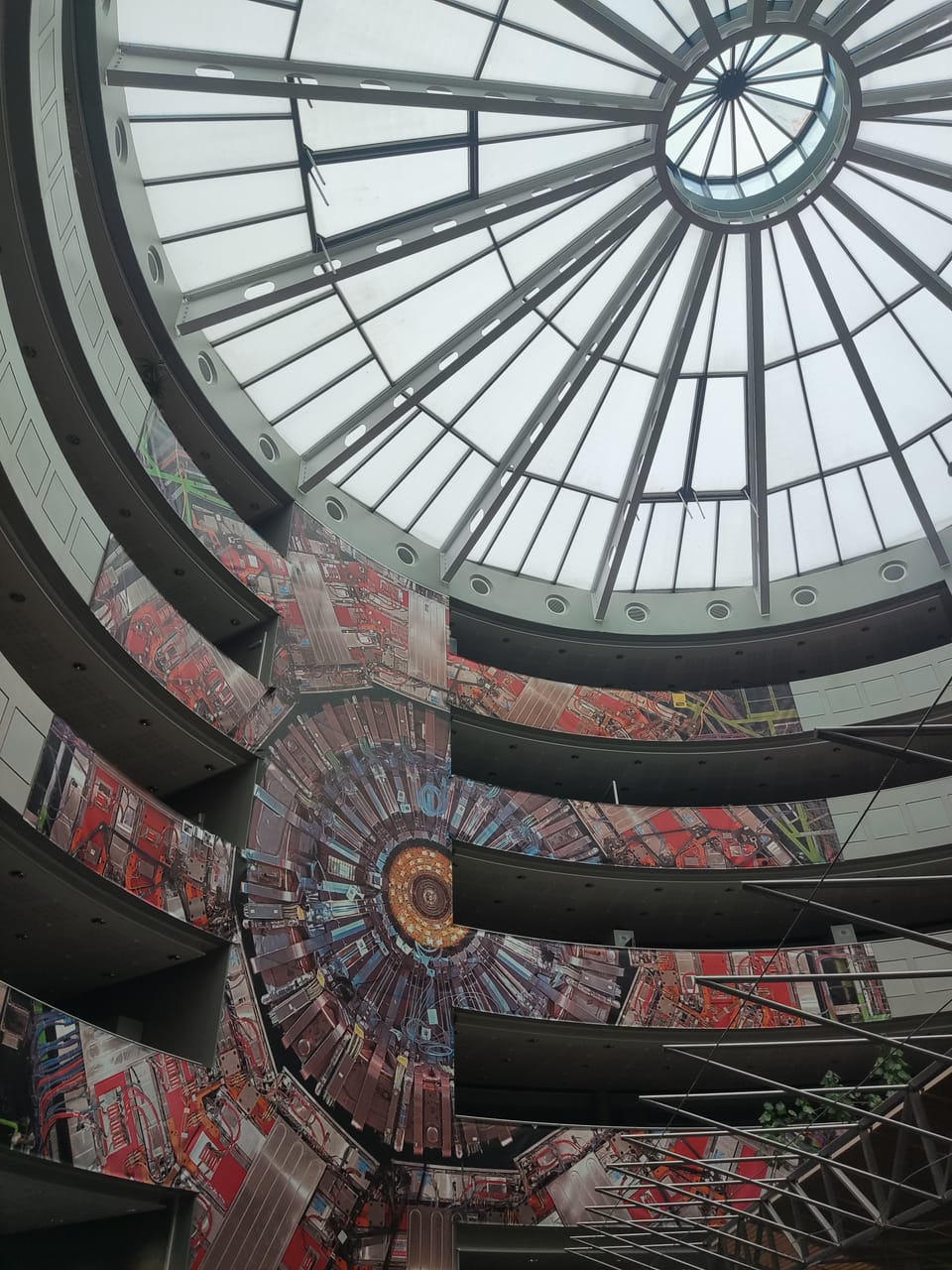
In the afternoon, we travelled to the CERN Prévessin site in France. There we met Christoph Rembser, a CERN physicist, who gave an inspiring talk called “Introduction to CERN’s Experiments and Facilities”. He helped us understand how everything fits together – from underground detectors to massive magnets – and how thousands of scientists across the world work as one team to answer the biggest questions in physics.
Then came something even more powerful: the students' questions.
One student asked Christoph if working at CERN had changed his views on religion. His answer gave us a lot to think about: “Science tries to answer ‘How?’ and religion tries to answer ‘Why?’ – so the two don’t interfere with each other.”
He explained that science helps us understand how the universe works – how particles move, how stars form, how forces interact. But religion asks different questions – about meaning, purpose, and why we exist at all. These are not the same, but both are valuable. Many of us had never thought about it that way – that you can believe in both science and faith, because they are not fighting each other. They are looking for different truths.
Another student asked whether Christoph enjoys finding answers more, or discovering new questions. He replied without hesitation: “Every answer gives birth to new questions.”
That quote stayed with us. It reminded us that science is not about finishing – it’s about continuing. Every discovery opens a new door. One student said later, “It’s like chasing stars. You never reach the end, but you always move forward.”
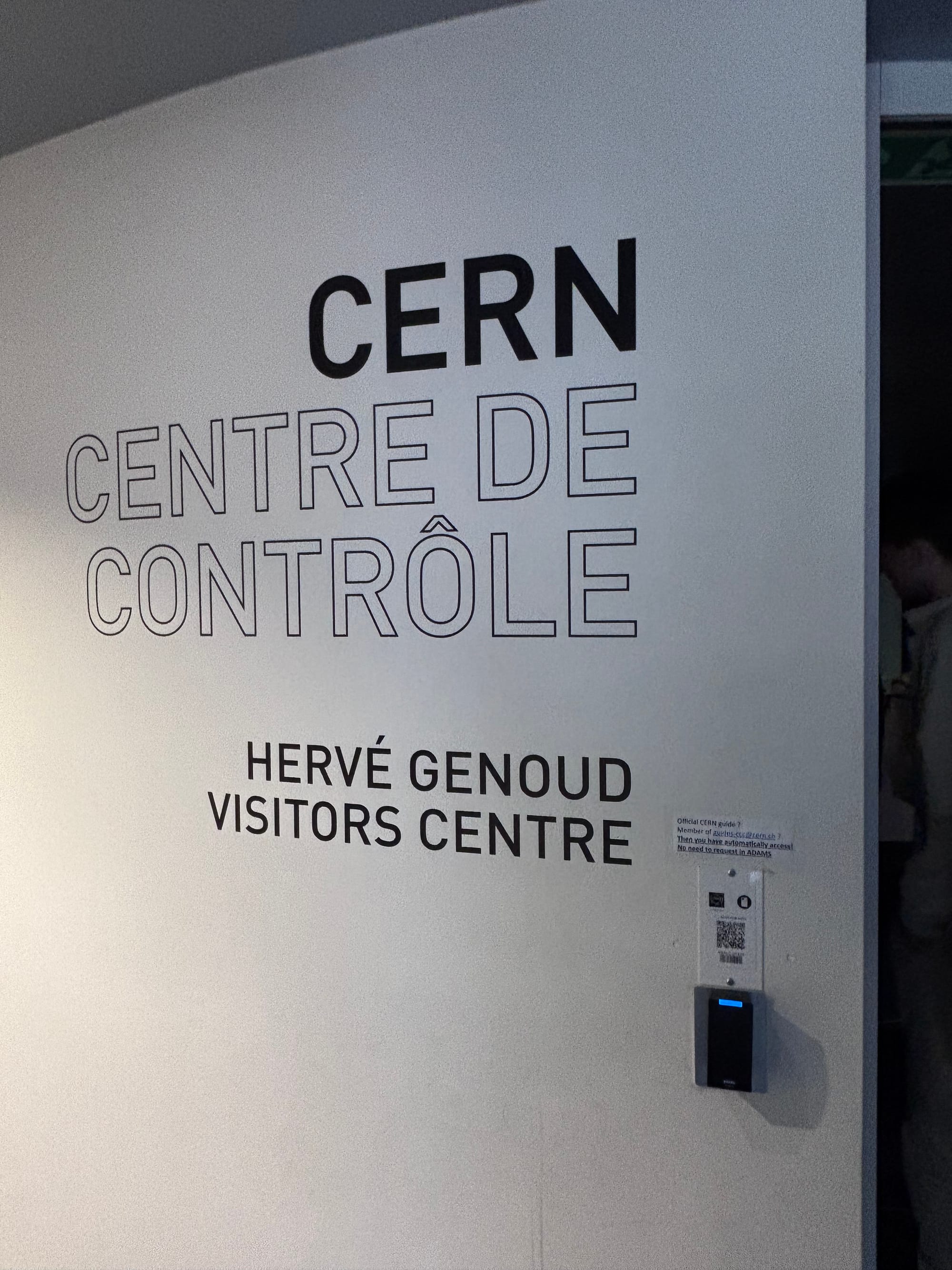
We ended the day with a visit to the CERN Control Centre, where scientists monitor the accelerators and manage the beam lines of the Large Hadron Collider. It looked like a space mission control room – glowing screens, blinking lights, focused people. We watched as they made tiny adjustments to systems running deep underground. It was quiet, but full of energy. One student whispered, “This is the brain of the whole place.” And it really felt that way.
By the evening, our heads were full – not just of facts, but of ideas. Day 5 showed us something important: it’s not only about knowing the answers, it’s about learning how to ask better questions. And today, we asked some of the best.
The expedition continues tomorrow. And so do our questions.