Medical Engineering and Physics: Advancing Healthcare Through Technology
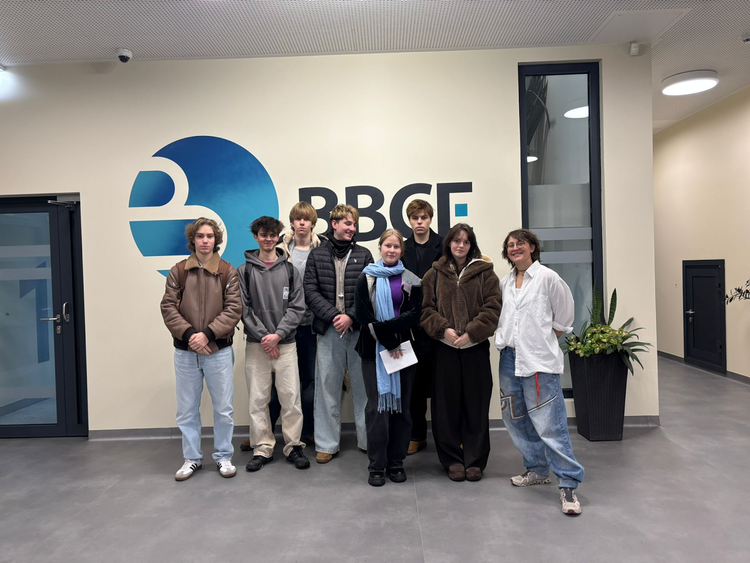
As part of an ISST project designed to help students gain a deeper understanding of the university, our assignment took us to the Medical Engineering and Physics Department at RTU, where we explored the vital role of its state-of-the-art lab in shaping the next generation of medical engineers and physicists. Unlike traditional research labs, this facility is dedicated to teaching, offering students both theoretical knowledge and hands-on experience to navigate the complexities of medical technology.
The tour was led by Assistant Professor Vineta Zemīte, who provided invaluable insights into the lab's functions and the importance of this educational approach. With a Doctoral degree in engineering science and serving as a docent, she brings a wealth of expertise to her work. Her academic background includes studies at the "Latvijas Jūras Medicīnas Centrs" and a Bachelor's degree from the "Latvijas Medicīnas Akadēmija" (Stradiņš University), along with numerous other qualifications in the medical field.
During our visit, we discovered a dynamic learning environment where future professionals are not only taught the fundamentals but also trained to operate medical equipment used in hospitals, clinics, and manufacturing settings.
“Strict regulations in the medical field make it difficult to explore how machines work in traditional healthcare settings. However, understanding their operation is crucial, as it forms the foundation of every medical procedure.”
— Assistant Professor Vineta Zemīte
Students interested in medical engineering and physics have the choice of two programmes:
| Bachelor’s Degree in Medical Engineering and Physics | Master’s Degree in Medical Engineering and Physics |
|---|---|
| A four-and-a-half-year program culminating in a single diploma with two components: - A Bachelor’s degree in Medical Physics - A qualification in Medical Engineering (Medical Technology Engineer qualification) |
A postgraduate program offering advanced education in both disciplines, preparing students for specialized careers in research, industry, and healthcare. |
Student Story
One such student, Tomass, who is about to finish his Bachelor's degree, showed us his project based on measuring blood-oxygen levels using a diode and laser. As we looked over the complicated filtering and amplifying circuit he built, we were amazed by the fact that a medical field can also include things that would never be regarded as technology-based.
The work of medical engineers and physicists is diverse and crucial to the functioning of modern healthcare. They specialize in areas such as:
Medical Imaging
Using techniques like X-rays, MRI, and CT scans to diagnose conditions accurately.
Radiation Therapy Planning
Determining the precise location and size of cancerous tumors, as well as the appropriate radiation dosage.
Nuclear Medicine
Utilizing radioactive substances for both diagnostic imaging and treatments, such as iodine therapy for thyroid cancer.
Medical Device Development
Collaborating with manufacturers to improve the efficiency, safety, and longevity of medical equipment.
The Two Different Professions (And The Tools Involved)
In the field of healthcare, both medical physics and medical engineering play crucial roles, however, they focus on different aspects of medical technology and patient care.
Medical Physics is a specialized field that involves the application of physics principles to medicine, specifically in areas like radiation therapy and nuclear medicine. Medical physicists work closely with doctors and healthcare teams to ensure the precise planning and delivery of radiation therapy for cancer patients. They are responsible for measuring and controlling radiation doses, guaranteeing the safety of patients and optimising the effectiveness of treatments.
Moreover, upcoming professionals are involved in the use of imaging technologies, such as X-rays and MRI (Magnetic resonance imaging) scans, helping to interpret the data in an aim to assist in diagnosing and treating various conditions. As mentioned before, patient safety and health is an essential part of understanding the usage of such technologies.
The machines used in the medical physics and engineering laboratory are considered "old-school," yet their presence serves a critical purpose: to teach the foundational principles of medical technology and physics. This laboratory focuses on equipping students with a deep understanding of the basics, ensuring they grasp the core concepts.
The purpose of x-ray machines is diagnosing imaging and equipment testing, x-ray machines are essential for teaching students how to analyze and illustrate radiographic images. It also helps in studying tissue density, detecting abnormalities and calibrating diagnostic settings. This equipment allows for non-medical usages such as scanning microelectronics to identify structural defects in circuit boards.
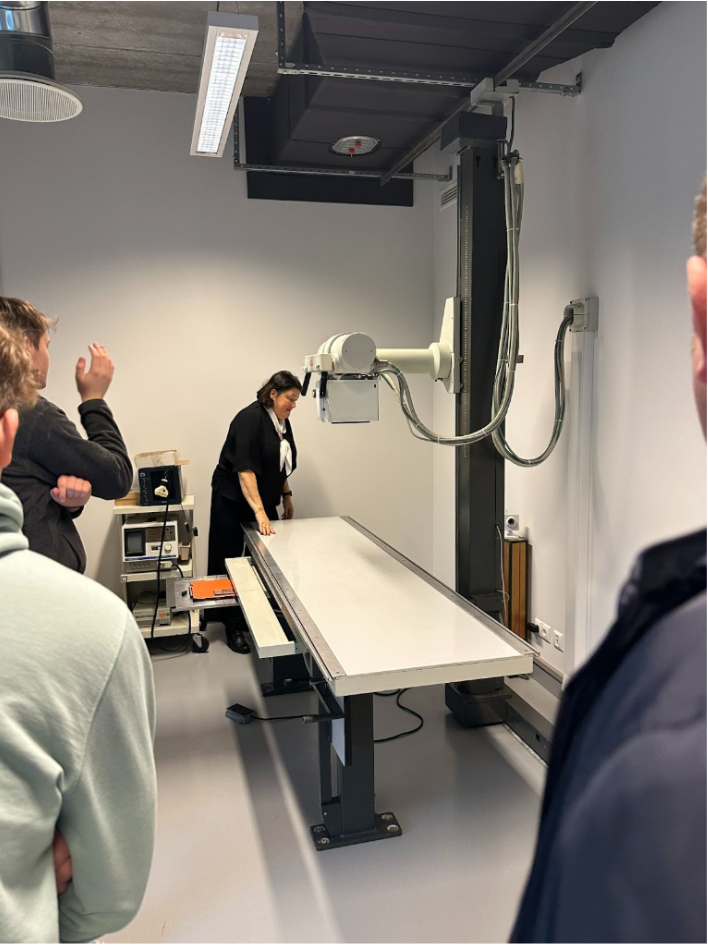
X-ray Machine - Used for diagnostic imaging and equipment testing
Computed Tomography (CT) scanners are used for advanced imaging, providing 3D views of the human body for medical diagnostics. They also utilise contrast media, such as iodine to enhance image clarity and detect abnormalities like tumors. CT scans aren’t the best for the human body so they use phantom, large acrylic tubes to measure the radiation dose delivered during a CT scan, which ensures patient safety.
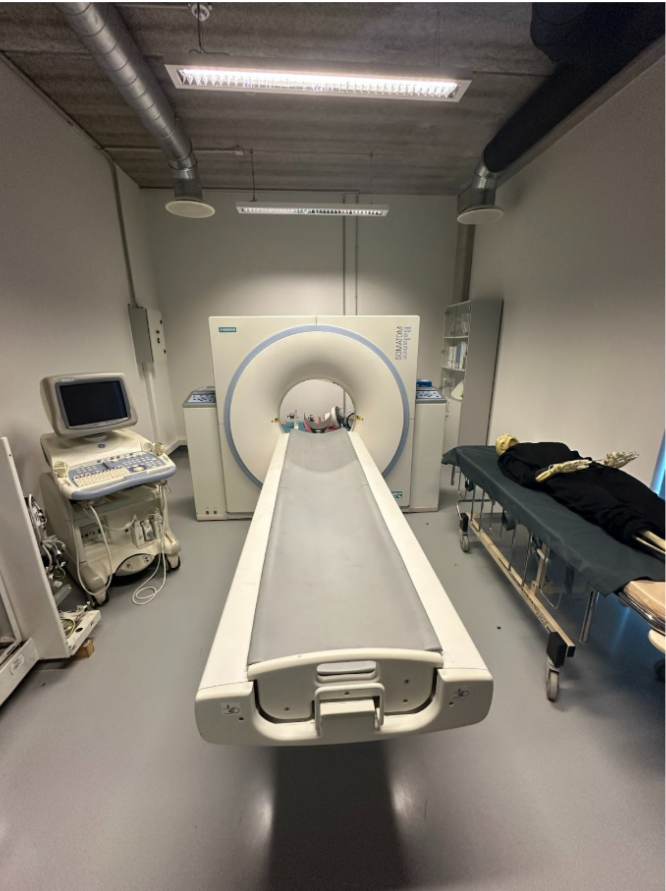
Computed Tomography (CT) scanner
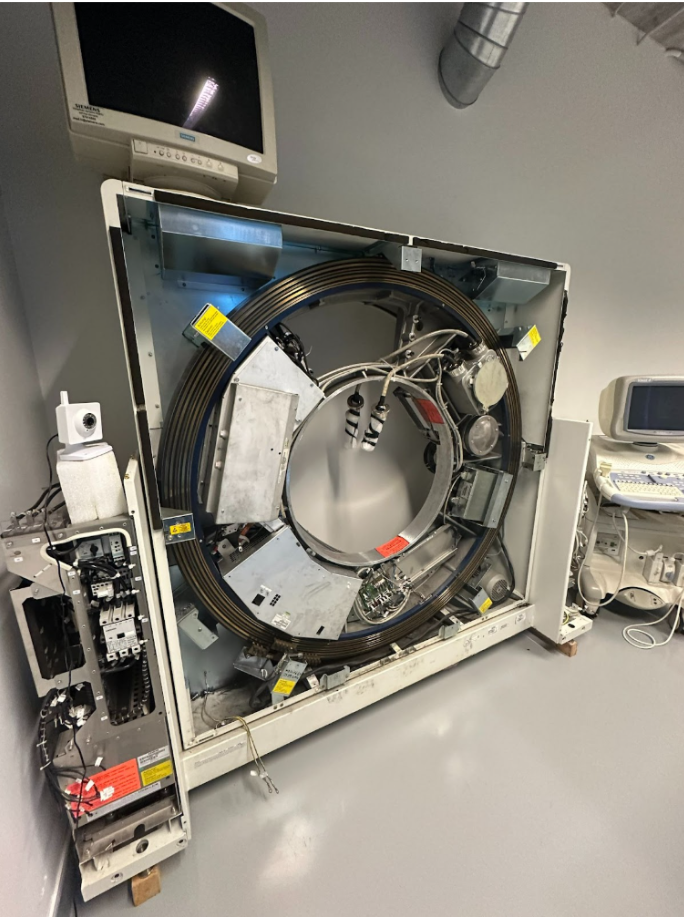
Opened up CT Scanner
Such medical engineering focuses on the design, development, and maintenance of medical equipment. Medical engineers are in charge of ensuring that devices like MRI machines, X-ray equipment, and other diagnostic tools are functioning correctly, safe and efficient for clinical use. They work on improving existing technologies and developing new innovations to improve patient care. They are vital in the maintenance of the advanced machinery used in healthcare settings, ensuring everything from calibration to troubleshooting, and collaborating with medical physicists to make sure the technology aligns with therapeutic and diagnostic needs.
In fact, exposure to radiation must be carefully monitored and minimized. The standard safe exposure limit is approximately 1 millisievert per year, and every effort is made to ensure that radiation therapy and diagnostic imaging use the lowest effective doses. Different manufacturers approach this challenge in distinct ways. Machines produced by General Electric (GE) prioritize high image quality, making them particularly useful for obtaining precise diagnostic images. In contrast, many European manufacturers design their machines to balance image clarity with reduced radiation exposure, an approach that is especially important for patients who require multiple scans over a short period of time.
This laboratory offers a variety of learning tools, including medical devices, phantoms, and a lifelike human model called "Piksis." These resources provide students with hands-on experience similar to what they will encounter in their medical careers. Phantoms serve as versatile tools in medical training, simulating different body structures, diseases, and conditions, offering realistic scenarios for diagnostic practice. They are often used for training in radiology, ultrasound, CT scans, and MRI techniques, allowing students to practice identifying and analyzing conditions like tumors, fractures, and organ abnormalities. These lifelike models help students build diagnostic skills, improve technical proficiency, and gain confidence in interpreting complex imaging data.
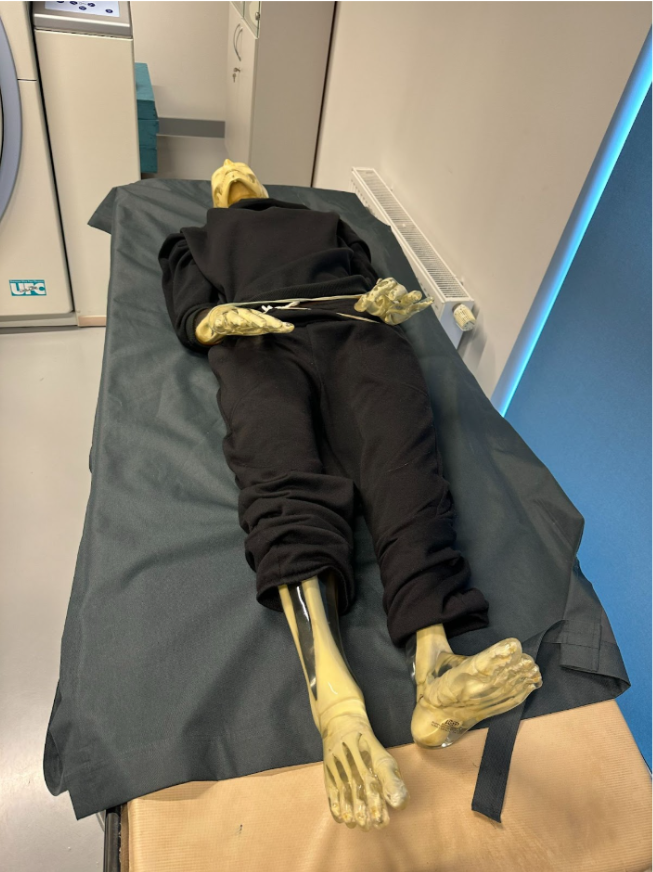
The student's best friend - Piksis
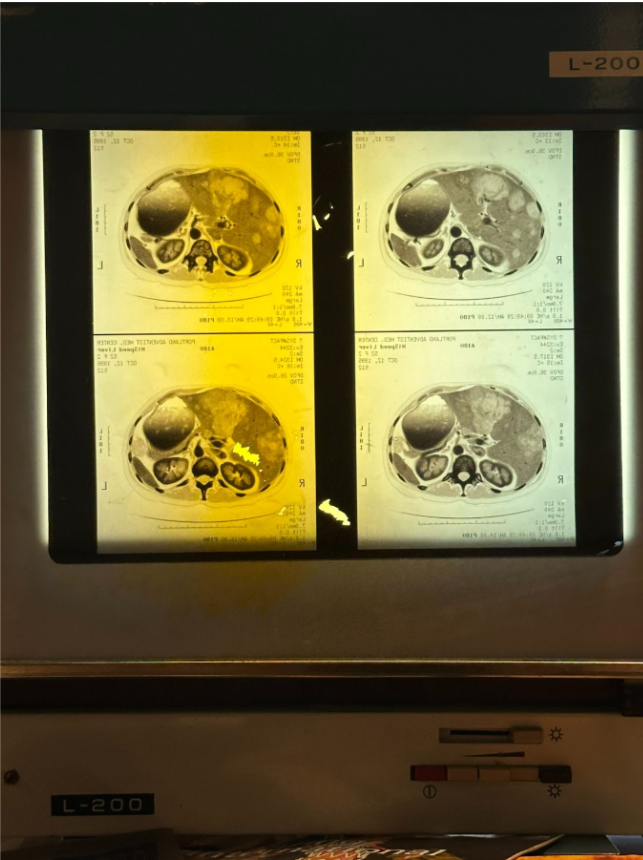
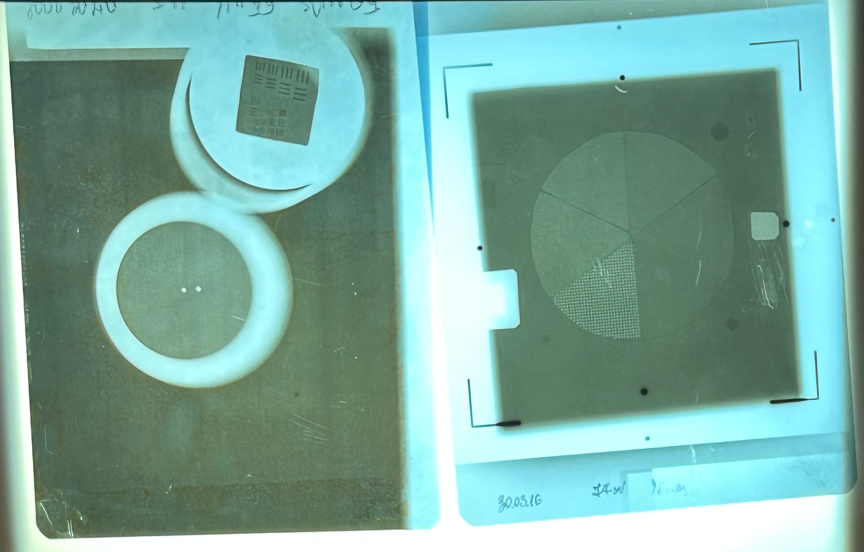
Lit up images from the X-Ray machine being shown using a light box
The medical physics and engineering laboratory is more than just a hub for learning and experimentation, it is a space that exudes a welcoming, homey atmosphere. This unique environment fosters a sense of community and belonging among students, staff, making it a place where everyone feels comfortable to learn, collaborate and grow. The medical physics and engineering laboratory is more than just a place to study it is a second home for students and educators alike. We are truly impressed and hope to be back to learn more.
A couple of excellent quotes from the assistant-proffesor:
“Study, study, study. Study until pension time”
“Every technique is generated so fast, that you can only go forward”
Produced by: Matīss, Kristaps, Maiks, Ksenija
Presentation:
Video: