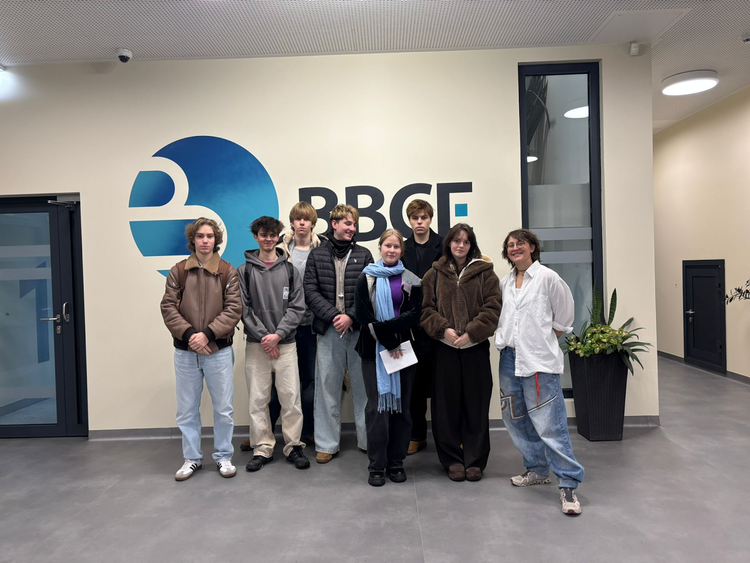
Printing the Future: Inside RTU’s 3D Concrete Printing Lab
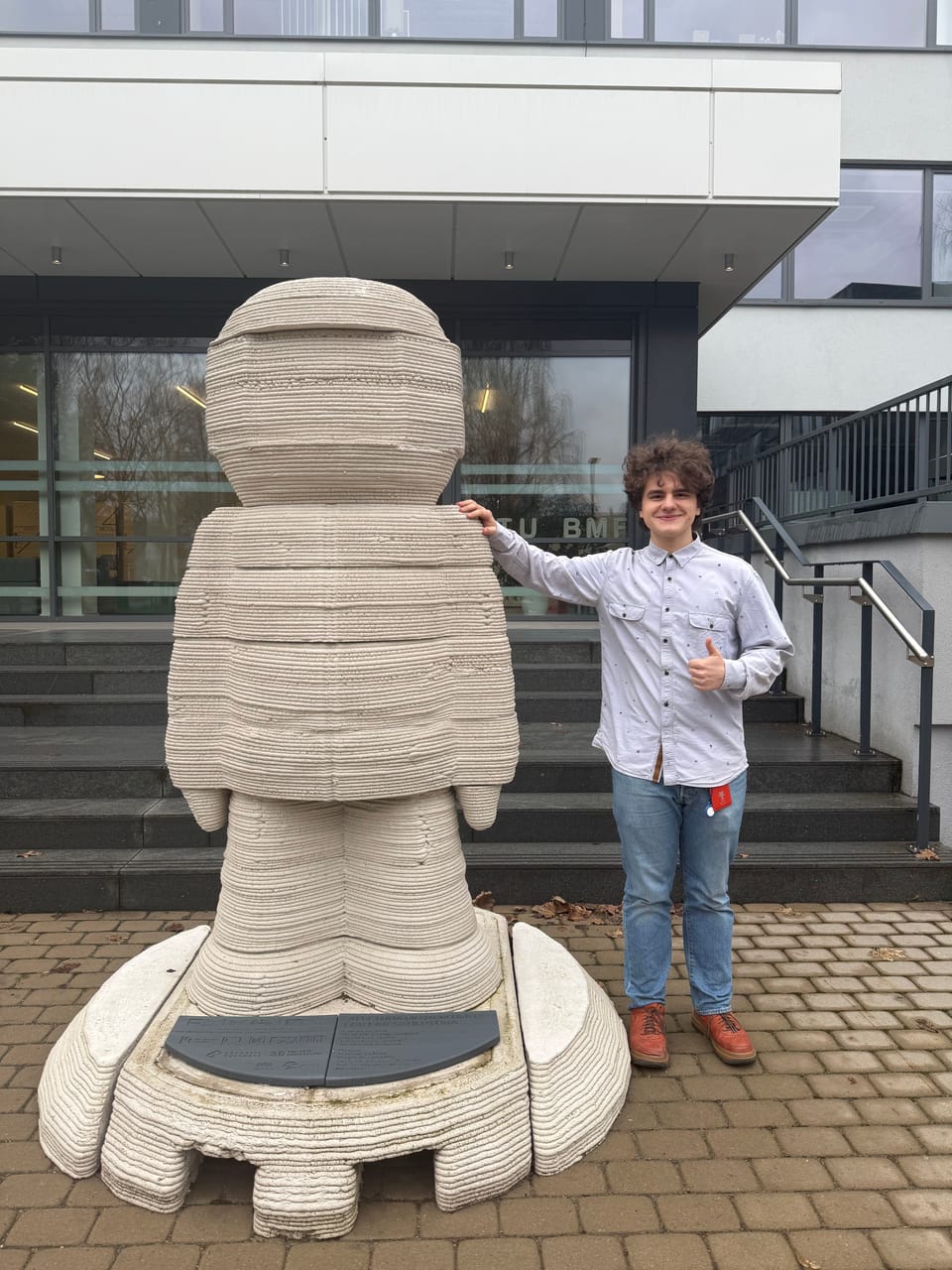
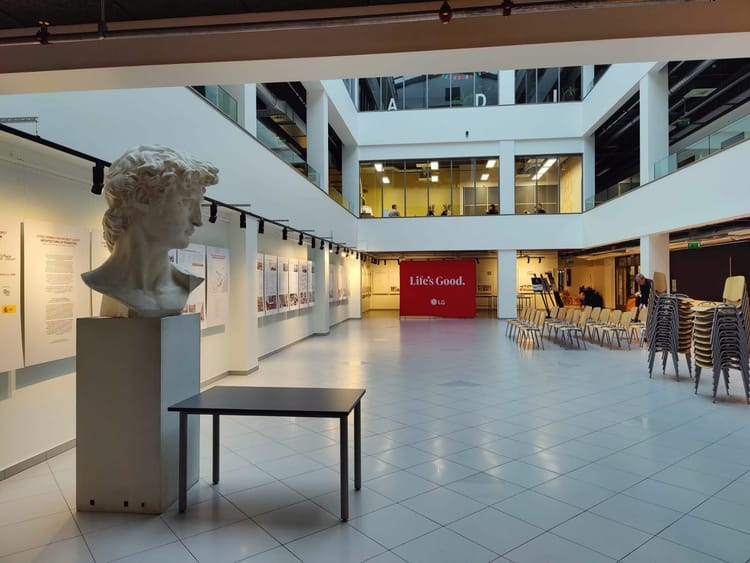
When visiting RTU, you might stumble upon a striking concrete statue of a person. Seeing it, you might pause and wonder—where did this come from? What’s its story? Well, today, we’re going to tell you all about the "Scientific Laboratory for 3D Concrete Printing," the very place where this statue was brought to life. But this lab isn’t just about statues—it’s a hub of innovation, creativity, and sustainability in construction technology.
The laboratory was founded in 2021 by Maris, a passionate and determined innovator who had a bold idea: to build his own 3D concrete printer from scratch. In the beginning, the process was far from seamless—there was no automation, and Maris had to push the concrete out by hand. But that didn’t stop him. Over the past four years, through trial, error, and relentless improvement, his creation evolved into a fully functional, highly efficient printer. Today, despite the presence of a massive, high-tech, and incredibly expensive industrial printer in the lab, Maris’ original machine remains the heart of the operation. It has gained motors, a solid base, and intricate electronics, turning it into a piece of equipment that rivals some of the best 3D printers in the world.
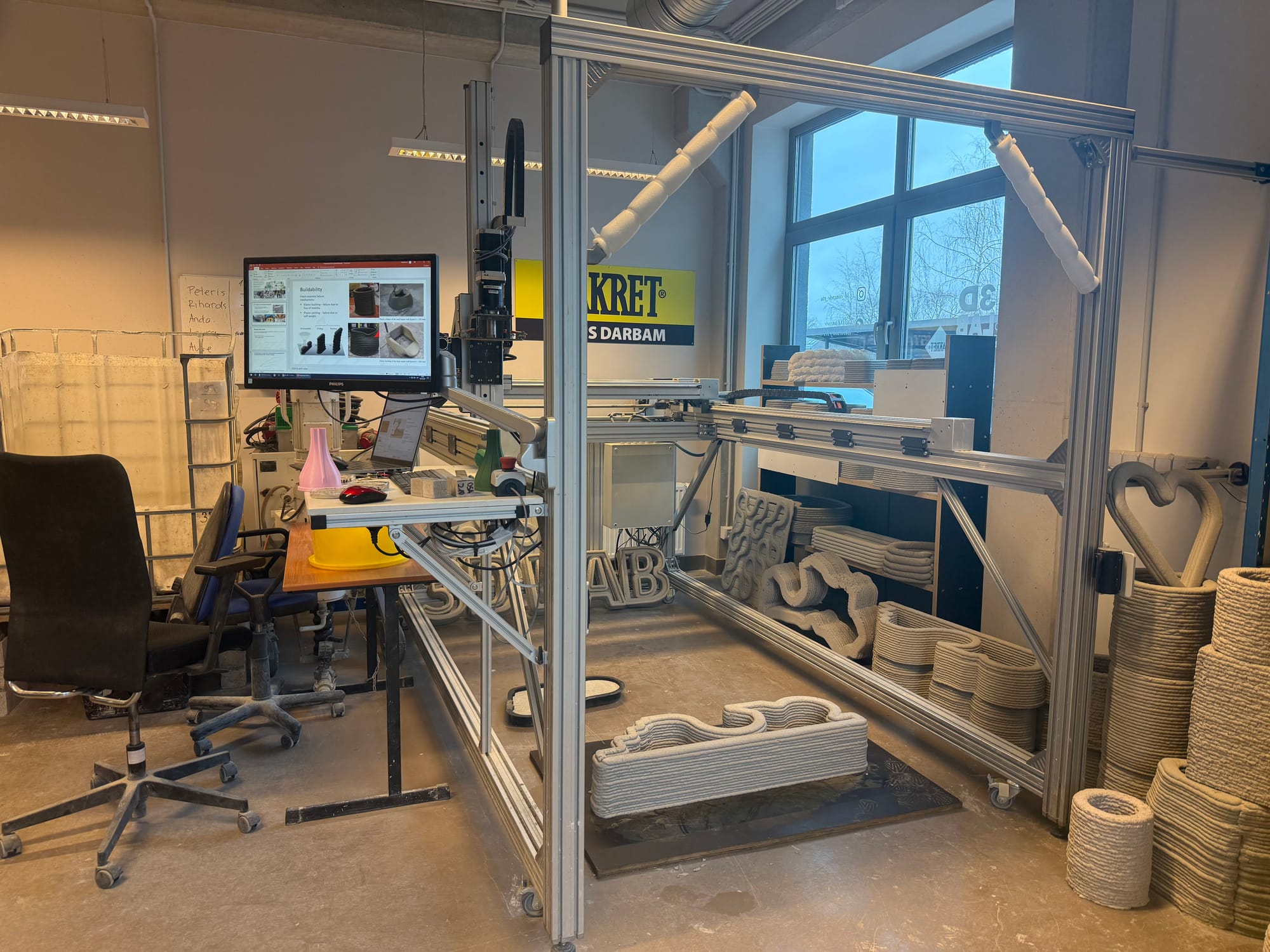
Of course, none of this would have been possible without financial support. And here’s something surprising—the main funder isn’t RTU itself. Instead, it’s "SAKRET," one of the largest and most well-respected manufacturers of dry construction materials. SAKRET isn’t just about writing checks; they also provide the laboratory with all the materials needed for their research and printing. Their support has been instrumental in driving the lab’s success, allowing researchers to push the boundaries of 3D concrete printing.
So, what’s the big picture? What is this laboratory really trying to achieve? Their mission is twofold. First, they aim to revolutionize the construction industry, a field that, surprisingly, has remained largely unchanged for centuries. Through 3D concrete printing, they hope to modernize traditional building methods, making them more efficient, adaptable, and innovative. But that’s not all. They also have a deep commitment to sustainability. Concrete production is responsible for more than 7% of global carbon emissions—a staggering number. The team at the lab is determined to find ways to reduce this impact, exploring new techniques and materials to make concrete production more eco-friendly. And, of course, they’re working to make 3D concrete printing technology more accessible, so it can be used on construction sites around the world.
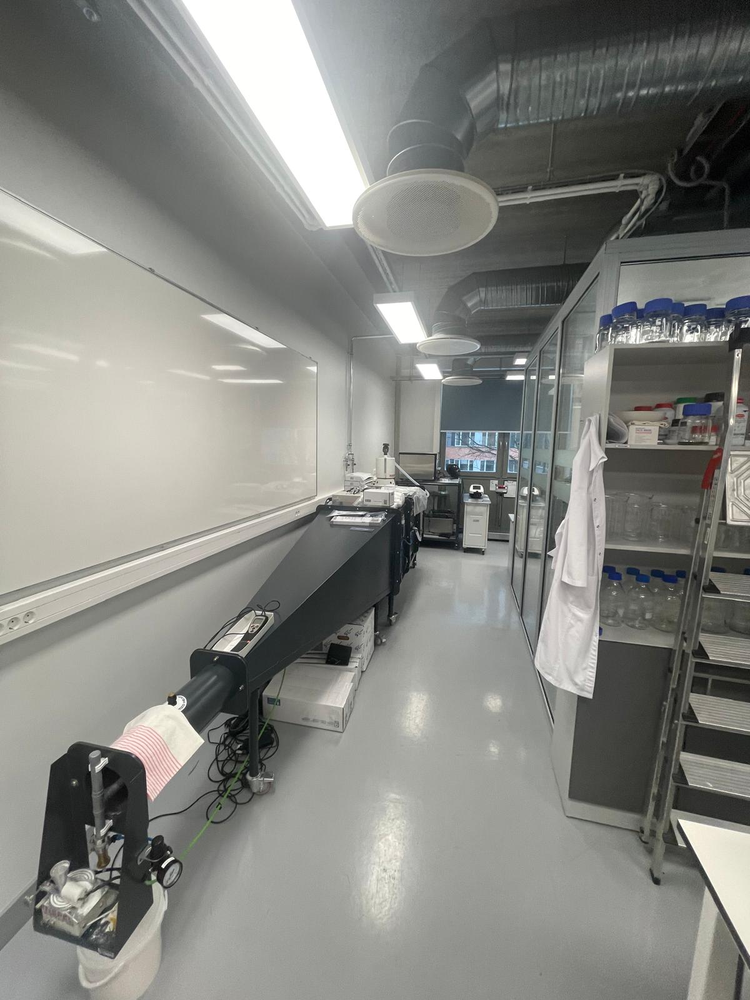
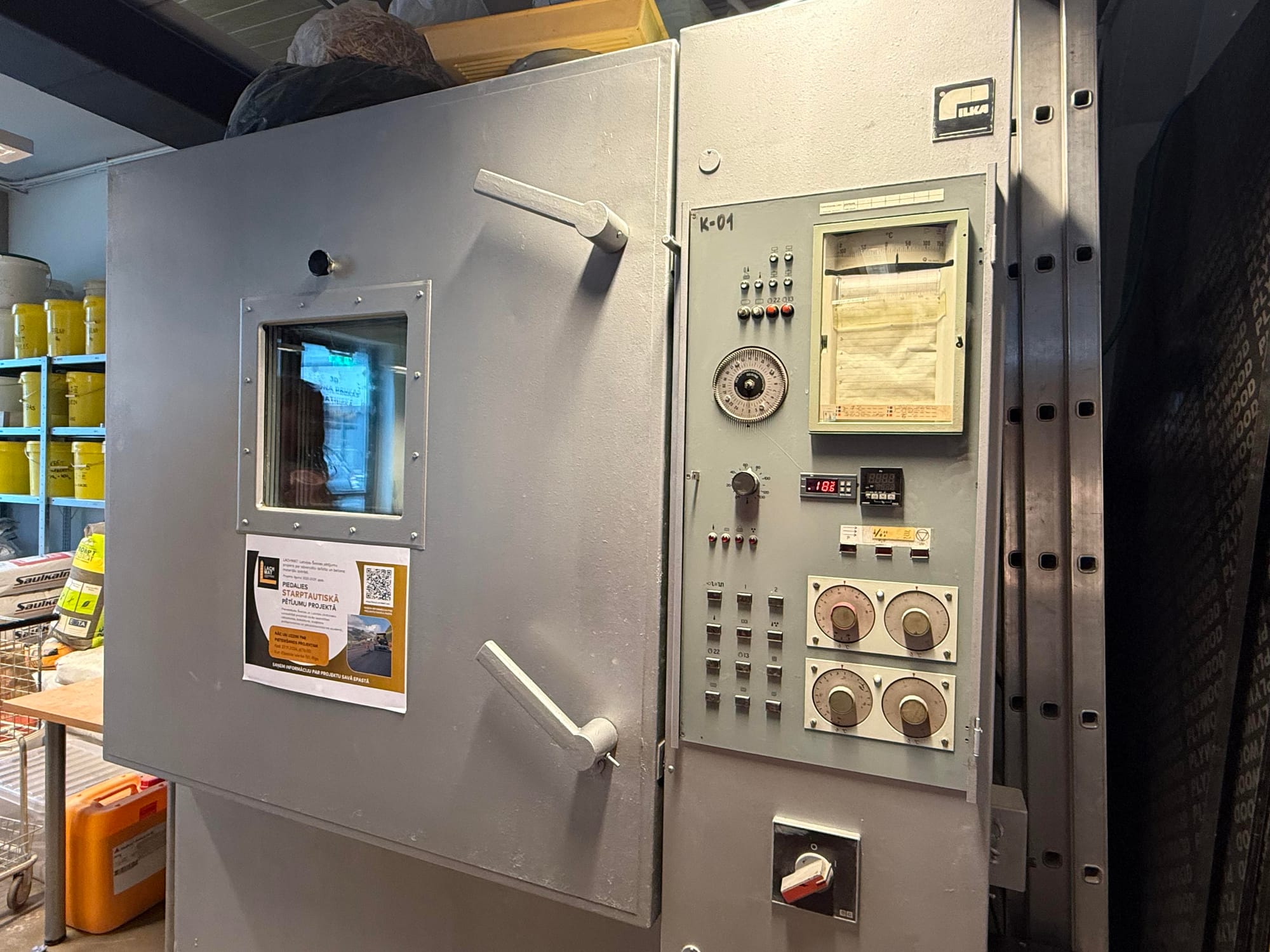
Now, you might assume that because this laboratory is relatively new, all of its equipment must be state-of-the-art. But that’s not entirely true. Among the modern tools and high-tech machinery, there are a few relics from the Soviet era that still play a crucial role in their work. One of the most used pieces is a Soviet-era frost durability tester—a massive chamber designed to put concrete samples through extreme freezing and thawing cycles. This helps determine how well the material can withstand climate changes, ensuring it meets the highest standards for durability.
But the laboratory’s work doesn’t stop within its own walls. The team is also involved in an exciting international collaboration with the Estonian government. This project focuses on sustainability and resource efficiency, specifically looking at how to repurpose waste materials. They’re working with ashes left over from the combustion of oil shales—fossil fuels burned for heating. Instead of letting this byproduct go to waste, they’re testing ways to substitute part of the cement in their concrete mixtures with these ashes. This approach not only helps reduce the environmental footprint of cement production but also gives new purpose to industrial waste, making it a win-win solution.
At the end of the day, the "Scientific Laboratory for 3D Concrete Printing" is so much more than just the birthplace of a statue. It’s a place where ideas take shape—where technology meets sustainability, and where passionate individuals are working hard to reshape the future of construction. From its humble beginnings to its cutting-edge research, this laboratory stands as a testament to the power of innovation, perseverance, and the drive to create a better world.
Published by: Aleksander Semenov, Mihail Vladishev, Kirill Dulkis, Kristiana Solima